Introduction:
Horses with lion’s heads and smoke coming out of their mouths, a woman drunk with the blood of the saints riding a scarlet beast, a white-haired man with eyes of flame and feet of shiny bronze . . . It sounds like the hallucination of a drug addict on LSD or the plot to a modern vampire movie. Instead, it is something much more serious and relevant to our everyday reality; it is the book of Revelation, or as it is known in some languages, The Apocalypse. In this book, God reveals important information about our past, present, and future. We are warned of the dangers facing the church in every era. There is information about the connections between earthly and heavenly actions, but most of all, the book is the revelation of Jesus, the Lamb that was slain from the foundation of the world. Yes, the book is full of difficult-to-decipher symbols and obscure Biblical references. Yes, it has been made even more puzzling because of the way modern media has sensationalized and appropriated many of the symbols for their own purposes, but it is crucial to study and bypass the misrepresentations in order to find the core messages that God has given His church today. Through the scenes of Revelation, we can understand how the events of the past fit into God’s great plan of redemption and have warning of the schemes that Satan has been hatching to keep us as far away from God as possible. This is one book of the Bible that it is dangerous to ignore.
Author:
The book of Revelation was written by the apostle John when he was an old man. John had lived peacefully in Ephesus for many years, but during the reign of Emperor Domitian, John was arrested and taken to Rome where his punishment was to be killed by being dipped in a vat of boiling oil. However, just as a fiery furnace could not touch Shadrach, Meshach, and Abednego, boiling oil had no effect on John. At least, this is what church tradition tells us. What we know for sure from the Bible is that John was sent into exile on the island of Patmos, most likely to work in the mines there. The other apostles were all long gone. Only John remained of the original twelve men who had been trained by Jesus and sent out to bring the gospel to the world. The lonely old man separated from his old friends by death and his younger friends by the sea could have spent the remainder of his years in obscurity, but God had other plans for His isolated apostle. On that barren island, God revealed to him a message that would guide the church through the eons ahead when even the long-lived John would no longer be around to counsel and warn God’s beloved congregations against the attacks that would come from within and without. Then in a surprising twist, God arranged for John’s release so that the Revelation of Jesus could be spread throughout the known world. Tradition says that unlike the other disciples, John died peacefully in his bed as an old, old man.
Setting and Time:
The book of Revelation was written about A.D. 96 during the reign of Emperor Domitian. While emperor worship had long been established in the Roman Empire, it was not until Emperor Augustus that worship of a living emperor began. It was Emperor Caligula who first started pushing persistently to be worshipped as a living god (A.D. 37-41). However, at the time, Christians were not significant enough to be targeted for not cooperating. However, when Emperor Domitian (A.D. 81-96) demanded worship, Christians joined Jews on the receiving end of his wrath over their refusal to bow down to his image. It is believed that as the last of Jesus’ disciples and one of the most important leaders of the church, John was targeted and brought to Rome for punishment.
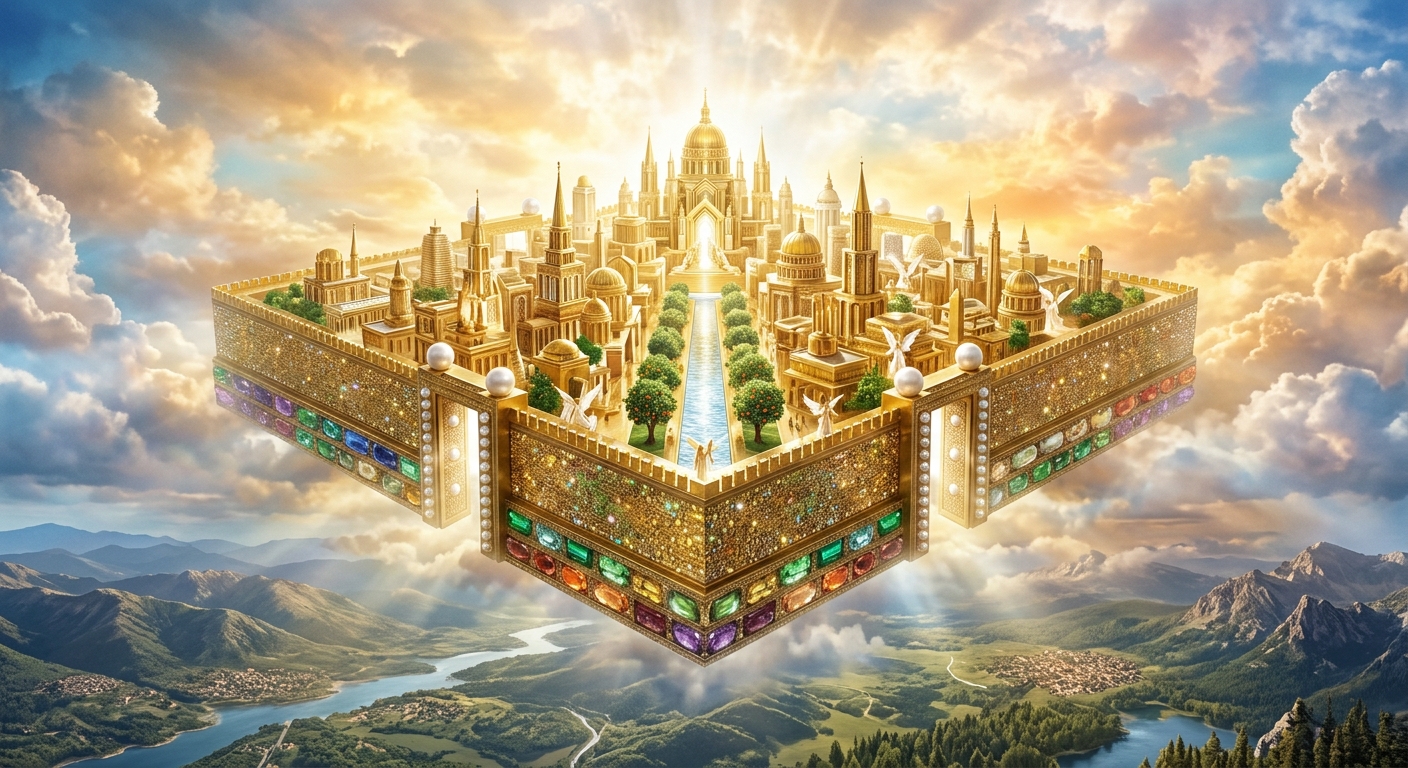
Why did God give the message of Revelation at this time period? The young church was in a crucial stage in its development. The first generation of eyewitnesses were mostly gone, and the church was in its second generation. These believers needed the encouragement of John’s visions, which revealed that the majesty of heaven far outshone the pomp and display of any worldly monarch. A Roman emperor was a pitiful god when compared to the great High Priest of heaven. The city of Rome was a dirty blood-stained village when placed next to the mighty New Jerusalem decked out with gates of pearl and streets of gold. In short, Revelation brought messages of encouragement to a church suffering from growing pains and persecution.
Theme:
A major theme of Revelation is Jesus’ interactions with His church throughout the ages. The book of Revelation speaks of a cosmic war between Christ and Satan that begins in heaven but soon encompasses planet Earth. The visions are not just concerned with local politics, even if those politics are that of the largest empire in the world. The visions do not simply deal with the present difficulties of believers, as painful as those problems were. Instead, the visions described in the book of Revelation bring readers from John’s time down through history and into a future where death is a distant memory and sin is no more. The war has been won, and Jesus is the victor.
Another theme to look for in the book is the temple scenes. Each new section of the book is introduced with an interlude that takes place in various sections of the temple. In order to understand the messages that follow, the reader must have some familiarity with the symbolic meaning and position of the various articles found in the sanctuary from oil lamps to the ark of the covenant.
Understanding Revelation:
The books of Daniel and Revelation stand together as the major apocalyptic literature of the Bible. Other books, such as Zachariah and Ezekiel, have some sections that could be considered apocalyptic also. These books are characterized by symbolism and metaphor. There are beasts that represent kingdoms and women that represent God’s people. How can the reader accurately find the literal meaning for all this symbolism and figurative language? The book of Daniel is a good beginning place for understanding Revelation, but it is just the starting point. Revelation is a distillation of the whole Bible. In order to understand a symbol used in Revelation, it is essential to go back to the original text being cited or alluded to and read the context. Then knowing that the original no longer exists, the reader must study to discover what aspect of the original is being used in Revelation. For example, Babylon was a real kingdom that interacted with the citizens of the kingdom of Israel. Babylon no longer existed when John received his visions, so the reader must examine the Biblical stories to determine which aspects of the original city of Babylon, God was referring to when He used it as a symbol in Revelation.
Organization:
1:1-3 Introduction
1:4-3:22 Letters to the Seven Churches
4:1-5:14 The Throne Room of God
6:1-8:1 The Seven Seals. There is an interlude between the sixth and seventh seal where the 144,000 are introduced.
8:2-11:19 The Seven Trumpets. These are judgments from God. There is an interlude between the sixth and seventh trumpet where a little book is introduced, the temple is measured and the fate of two witnesses is described.
12:1-14:20 War in heaven comes to earth. The leopard beast and the two-horned beast enter the conflict. Then comes the mark of the beast and the 144,000 who triumph over it followed by the message of the three angels and the defeat of God’s enemies.
15:1-17:18 The Seven Last Plagues
18:1-20:15 Evil is eradicated
21:1-22:5 The New Jerusalem and the new Earth
22:6-21 A Final Appeal
Conclusion:
If you have not studied both the Old and New Testament books, do not start with Revelation. The keys to understanding John’s visions lie in the rest of the scriptures. Twenty-eight of the Old Testament books are directly quoted or alluded to in Revelation. The most common references are to Isaiah, Ezekiel, Daniel, and Jeremiah, but significant amounts of references also come from the rest of the Old Testament. The New Testament is also alluded to, especially Matthew, Luke, Corinthians, Ephesians, Colossians, and Thessalonians. Without the background knowledge found in the other scriptures, Revelation will make no sense. However, for a mature Bible student who is familiar with the word of God, Revelation is not only comprehensible, but it is full of inspirational passages that will bring the reader closer to Jesus. The Apocalypse is worth the time and effort of studying because it is the Revelation of our Savior, Jesus Christ.