Introduction:
Evil is everywhere. The people who claim loyalty to God are full of violence and there is no justice for the innocent. Fighting and immoral behavior are on every side. And a child of God cries out in bewilderment, “O LORD, how long shall I cry for help, and you will not hear? Or cry to you “Violence!” and you will not save?” (Habakkuk 1:2). This was Israel. This was Jerusalem. This is also the world today. Habakkuk puts words to the feelings we have as we watch our world collapse into moral chaos where good is declared evil and evil good. God answers and reveals how He is going to deal with the problem. Habakkuk feels that the cure sounds as bad as the disease. In the same way, prophecies reveal to us how the evil in this sinful world will be resolved, and we have the same response as Habakkuk. Oh, we are fine with the end result, just as Habakkuk rejoices in God’s final judgment of the wicked in chapter three. However, the interim events trouble and, maybe, even terrify us if we are honest. The book of Habakkuk gives a voice to our troubled hearts. The prophet puts into words some of the thoughts we dare not utter. Then he settles all of our fears with the knowledge that God is our strength, and He will transform us so that we can leap like deer around the calamities to come and reach a high place of refuge in God’s secure mountains.
Author and Dates:
Who was the prophet who wrote the book that bears his name? No one knows. The name Habakkuk comes from the Hebrew word that means “to embrace”. This name is not found anywhere else in the Bible. The third chapter of Habakkuk is a song written to be sung in the temple, so some have speculated that he may have been one of the temple singers. The position of this book in the Hebrew and Greek scriptures indicates that Habakkuk’s ministry came after or around the time of the prophet Nahum. Certain clues in the message help to narrow down the possible time periods of the prophet. The temple was still standing (Habakkuk 2:20), so the book was written before the destruction of Jerusalem in 586 B.C. The rise of the Babylonians as an instrument of God’s judgment is predicted, but they have not yet become an imminent threat (Habakkuk 1:5-70). Some commentators have set the date for the book at about 630 B.C. during a time of great apostasy. Some suggested time periods are during the era of King Manassah, King Amon, or the early days of King Josiah’s rule.
Background:
The kingdom of Judah had reached its lowest level of degradation. The streets of Jerusalem were full of innocent blood, not from a pagan enemy. No, this was the work of people who worshipped in the temple (2 Kings 21:16). The same people who offered sacrifices of lambs and goats in the temple to Yahweh were offering their babies to be burned alive to the god Molech in the Hinnom Valley. In fact, the temple was no longer dedicated to Yahweh alone. Altars to false gods had been set up within those sacred precincts. Society was depraved. There was no legal recourse for the innocent because the courts had been taken over by evildoers. The Bible says that Judah had become more evil than the Canaanites and the northern kingdom of Israel had ever been. Judgment was coming to put a stop to the downward spiral that had taken hold of Judah, and yet there were still righteous people in the kingdom who cried out to God for deliverance.
The violence had to stop. How? A nation more violent and more proud than any other society was about to sweep through the land and separate the wheat from the chaff, the righteous from the unsalvageable brutes who were in control of Judah. Babylon was rising and would eventually swoop down upon the land conquering nation after nation, including Judah. In the first two invasions of Judah, the king of Babylon would take numerous captives away. These were not evil doers being punished. These were the Jews who still held some loyalty to God. The irredeemable idol worshippers were left behind in Jerusalem to face their ultimate destruction in the third invasion from Babylon. God put a stop to the overwhelming evil of His people by removing the remnant who could be saved and allowing the violent rebels who were left in Jerusalem to receive the results of their own treacherous actions. Babylon destroyed the people, the city, and the defiled temple. However, God’s people were safe in the heart of enemy territory until the time came to return and rebuild the temple and Jerusalem.
Theme:
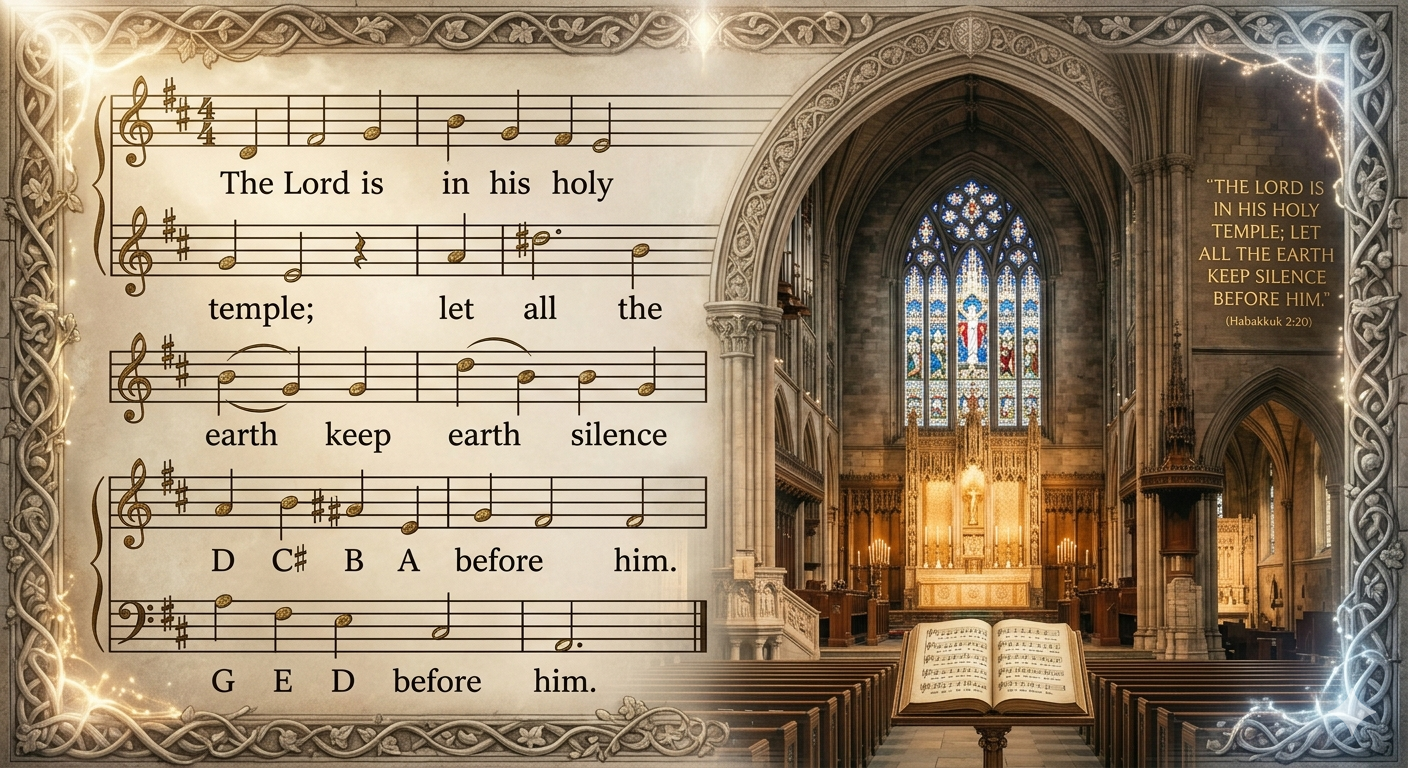
The book of Habakkuk contrasts the treacherous actions of humans with the faithfulness of God. God’s people are wicked. The Chaldeans are violent, but God can be trusted to put limits on the wicked and violent. Greedy humans cheat and pile up wealth. The Chaldeans are the greediest of all, collecting nations like rich men collect gold, but the cup of God’s wrath will flow out in judgment upon the greedy. God’s temple is defiled with idols, but He will redeem His house and fill it with His glory. Then the earth will gaze in silent reverence upon the true God. Chapters one and two speak of judgment against Judah and Babylon, but chapter three is a hymn of praise and prophecy that points to the final judgment of the world. Fearsome times will arrive, but the people of God can still live in joy. “yet I will rejoice in the LORD; I will take joy in the God of my salvation. GOD, the Lord, is my strength; he makes my feet like the deer’s; he makes me tread on my high places. . .” (Habakkuk 3:18-19).
Organization:
1:1-4 Habakkuk complains that God is not taking action against the wickedness of His people.
1:5-11 God reveals His plan to Habakkuk
1:12-2:1 Habakkuk questions God’s plan and demands an answer to his complaints
2:2-3 God responds that His plan will happen, but not yet.
2:4-12 God explains that the conqueror will receive his own punishment eventually
2:13-20 God’s will is not this round of evil, but that the world will be filled with the knowledge of God. The violent will be judged. The idol worshippers will be silenced. God will be reverenced.
Chapter 3 is a prayer that was to be sung in the temple. A Shigionoth is a kind of song or poem filled with abrupt rhythmic changes that reflect the corresponding quick emotional fluctuations. The song was to be performed with stringed instruments.
3:1-2 A plea for mercy to be mixed in with God’s wrath
3:3-16 This is a vision of Jesus’ second coming. Of course, Habakkuk did not know who Jesus was, but this description matches other references to the second coming of Christ. God’s glory streams out to the earth. The natural world is shaken. Judgment comes for the wicked and salvation for God’s people. Satan’s head is crushed and his warriors are pierced with arrows from God. One very interesting detail of the description is found in verse 4. “His brightness was like the light; rays flashed from his hand; and there he veiled his power.” Those nail scarred hands flash forth rays of light and are a source of power. God’s power is in His loving sacrifice for His people.
3:17-19 Habakkuk does not fear because his faith is in God who brings him joy in the middle of the fearsome events surrounding him.
Conclusion:
Habakkuk lived in times as evil as our own. He called out to God, “How long?” He was given prophetic messages that showed him troublesome times to come as the plan of salvation was worked out. He had no reservations about questioning God, but in the end, he affirmed God’s wisdom and put his trust in God’s plans. Habakkuk trembled at the terrifying events that were coming, but he remained joyful in his faith in the future that God had promised him and in the knowledge that he was safe within God’s protection. We are Habakkuk. We live in evil times and yearn for them to be over. We have been given numerous prophecies that reveal that we will have to endure even more trouble before the final resolution of the conflict between Satan and God. We have doubts and fears that we take to God. Then we rest in the faith that we can trust Jesus to see us through whatever awaits us. We can live in joy in the moment because we are in God’s hands.