Introduction:
The Old Testament was traditionally divided into three sections: the Law, the Writings, and the Prophets. We separate the Prophets into the majors and the minors. Most Christians can name the major prophets—Isaiah, Daniel, Ezekiel, Jeremiah, etc., but few people are familiar with the minor prophets, and even fewer people know the content of these books. Amos is one of those minor prophets that no one ever reads. One of the problems is the lack of context. Amos is difficult to understand because he refers to anachronistic objects, like hooks and ephahs, as well as ancient places and peoples that we have long forgotten. In addition, few people today care about the fate of the northern kingdom of Israel. After all, the Messiah descended from the royal line of the southern kingdom of Judah. However, this small book is important in several ways to modern readers. First of all, it is quoted in the New Testament. James used Amos 9:11-12 to justify the Jerusalem Council’s decision that the Gentiles did not need to become Jews in order to be saved by Jesus’ sacrifice on the cross. “And with this the words of the prophets agree, just as it is written, “‘After this I will return, and I will rebuild the tent of David that has fallen; I will rebuild its ruins, and I will restore it, that the remnant of mankind may seek the Lord, and all the Gentiles who are called by my name, says the Lord, who makes these things known from of old’”(Acts 15:15-18). Stephen refers to a prophecy in Amos 5:25-27 when he is listing the charges that God is bringing against the Israel of his day. “But God turned away and gave them over to worship the host of heaven, as it is written in the book of the prophets: ‘Did you bring to me slain beasts and sacrifices, during the forty years in the wilderness, O house of Israel? You took up the tent of Moloch and the star of your god Rephan, the images that you made to worship; and I will send you into exile beyond Babylon’” (Acts 7:42-43). Stephen says “beyond Babylon” because his accusation is for both Judah and Israel while Amos says “beyond Damascus” because he was only prophesying about the fate of Israel (the northern kingdom), but everything else is pretty much a direct quote. The New Testament reveals that Amos is not a throwaway book, but instead it has value for the modern reader. Secondly, there are profound spiritual lessons and future prophecies that can be beneficial to today’s Christians.
Author and Setting:
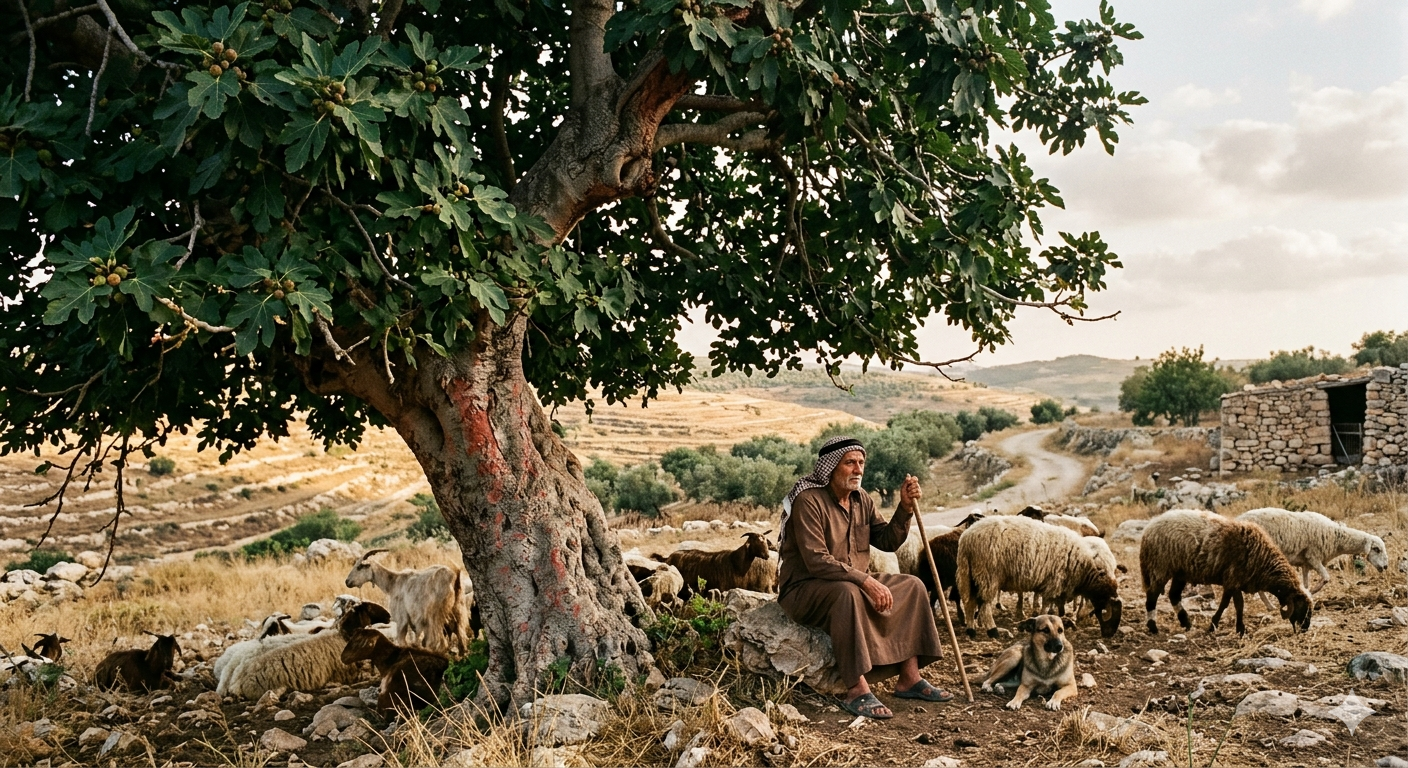
The author of the book is the prophet Amos. He reveals several details about his background in the first line of the book. “The words of Amos, who was among the shepherds of Tekoa, which he saw concerning Israel in the days of Uzziah king of Judah and in the days of Jeroboam the son of Joash, king of Israel, two years before the earthquake” (Amos 1:1). More detail is given later, “Then Amos answered and said to Amaziah, “I was no prophet, nor a prophet’s son, but I was a herdsman and a dresser of sycamore figs. But the LORD took me from following the flock, and the LORD said to me, ‘Go, prophesy to my people Israel’”(Amos 7:14-15). Tekoa was actually in the southern kingdom of Judah, so God had commanded Amos to leave his home and travel north to prophesy in the neighboring country. Amos was a shepherd and agriculture laborer before his calling. Sycamore figs were inferior to true figs and had to be punctured sometime before being harvested to make them edible. On the other hand, there were multiple harvests during the year, so Amos had a steady job. However, the day came when Amos was called to leave his peaceful lifestyle in order to prophecy to the idolatrous kingdom of Israel. This occurred during the time of King Uzziah of Judah and King Jeroboam II of Israel. This makes him a contemporary of Hosea (the prophet who had to marry a prostitute to illustrate Israel’s tainted relationship to God). Not long after, Isaiah would arrive on the scene to add to the warnings to both the northern and southern kingdoms.
Background:
To understand Amos, it is important to go back to the death of King Solomon. At that time there was just one kingdom of Israel. However, the kingdom split after his death. Solomon’s son reigned over the southern kingdom of Judah while Jeroboam I was anointed king over the northern kingdom of Israel. The temple of God was in Jerusalem in the kingdom of Judah. King Jeroboam was afraid that he would lose power if his people made the prescribed pilgrimages to Jerusalem several times a year, so he devised a plan where he made two calf idols and set them up at Bethel and Dan (I Kings 12:25-33). He also established a non-Levitical priesthood. Thus, he turned his back on Yahweh and encouraged idol worship. The people of the kingdom of Israel worshipped both Yahweh and idols. At various times, they listened to the prophets of God and returned to Yahweh, but in the end, their worship of the God of Israel was a mere formality while their hearts belonged to their idols. As a result, their characters degenerated into selfishness, greed, and carnality. They were nearing the termination of their probation with God in the time of Amos. He and Hosea were called by God to warn Israel that the end was approaching unless they repented and returned to the God of their forefathers who had brought them out of Egypt and given them the land that they now occupied. When Amos began prophesying the destruction of Israel, it must have seemed unbelievable to the degenerate citizens of the northern kingdom. Their present king, Jeroboam II, had just successfully won back their original territory (II Kings 14:25). They were riding high on that success when Amos began forecasting the total destruction of Israel and the removal of its people. It was inconceivable, but within the next 40 years, Assyria had conquered the land, resettled its residents in other areas and replaced them with foreigners. The impossible prophecies of Amos had been fulfilled.
Organization:
1:1 Introduction of Amos the prophet
1:2-2:16 Amos begins with judgments against the nations surrounding Israel. After pronouncing destruction on Syria, the Philistines, Tyre, Edom, Ammon, and Moab, Amos turns his attention to Judah. Finally, he arrives at the main focus of his prophecies—Israel.
3:1-6:14 Amos assures Israel that the punishment that he is pronouncing upon them will come to pass unless they repent, but since they refuse to return to Yahweh and reform their behavior, their destiny is fixed. Amos begs for mercy for Israel, but he sees that there is no hope. He warns them that the day of the Lord is not a day of triumph for the kingdom. It will bring total destruction. He lists multiple sins that have brought about their downfall: apostasy, moral degradation, greed, and selfish indulgence at the expense of the poor and weak.
7:1-9:10 Amos has a series of visions about the destruction of Israel that include locusts, fire, a plumb line, and famine. The visions are meant as symbolic warnings so that Israel will repent. In 7:10-17, a narrative is inserted between the various visions. The priest of the golden calf temple at Bethel accuses Amos of treason before King Jeroboam II. When that strategy is unsuccessful, the priest begins threatening Amos and telling him to return to Judah. Amos responds with a prophecy about death and the exile of Israel, but more specifically, the priest’s own family.
9:11-15 God does not leave Israel without hope. The first half of chapter nine is death and destruction for Israel, but in the last section, God promises to restore Israel. This prophecy seems to be more about the New Jerusalem of Revelation than a promise of the rise of the northern kingdom again.
Context for Some Difficult Verses: This is not complete. It is provided to show you that the difficult passages can be understood if you do your research.
For three transgressions of Damascus, and for four—This was a poetic form used in the area at that time. Canaanite literature also used this poetic form. Three was a lot. Four was over the top.
Do two walk together, unless they have agreed to meet?—God’s unique relationship to Israel cannot continue because they are not in agreement. If Israel chooses not to walk with God, there is no covenant.
the houses of ivory shall perish—According to archaeological finds, the rich people of Israel had paneled and inlaid their houses with ivory. The homes of the king and the rich and powerful residents of Israel would be destroyed.
who feel secure on the mountain of Samaria—The city of Samaria was built on a hill surrounded by a plain. It would have been extremely difficult to conquer. In fact, it took the Assyrians about three years to take it.
they shall take you away with hooks, even the last of you with fishhooks—Some commentaries feel that this simply meant that the people would be helpless, like fish on a hook, but archaeology has provided an even crueler fulfillment for this prophecy. The Assyrians, who would be the conquerors who depopulated Israel, routinely inserted hooks into the lip or nose of important captives and led them away by a string tied through the hook. This was meant to humiliate kings and other important prisoners.
cleanness of teeth in all your cities—No food so no dirty teeth. In other words, there would be famine.
Conclusion:
God never planned to have two divided kingdoms for his people. When the exiled residents of Judah returned to rebuild Jerusalem, some of the descendants of Israel returned with them (Ezra 6:17). However, compared to the people of Benjamin and Judah, the representatives of the northern kingdom were few in number and did not maintain their separate tribal identity. After the Babylonian exile, there was only one Israel and one temple to worship in. Many Christians try to apply the final prophecy of the restoration of Israel to the modern secular nation of Israel, but that is not how the Bible interprets itself. Jesus’ brother James clearly understood that this prophecy was speaking about the spiritual Israel that included both Jews and Gentiles, i.e. the church (Acts 15), in other words, the restoration described in Revelation 21 where God provides a new heaven and earth with the New Jerusalem as the capital city of the world.
The book of Amos shows us that there is an end to probation for individuals and nations, but that anyone who repents and turns to God will inherit the promise of a home and life. The message was not just written for the northern kingdom. We are recipients of the promised restoration also.